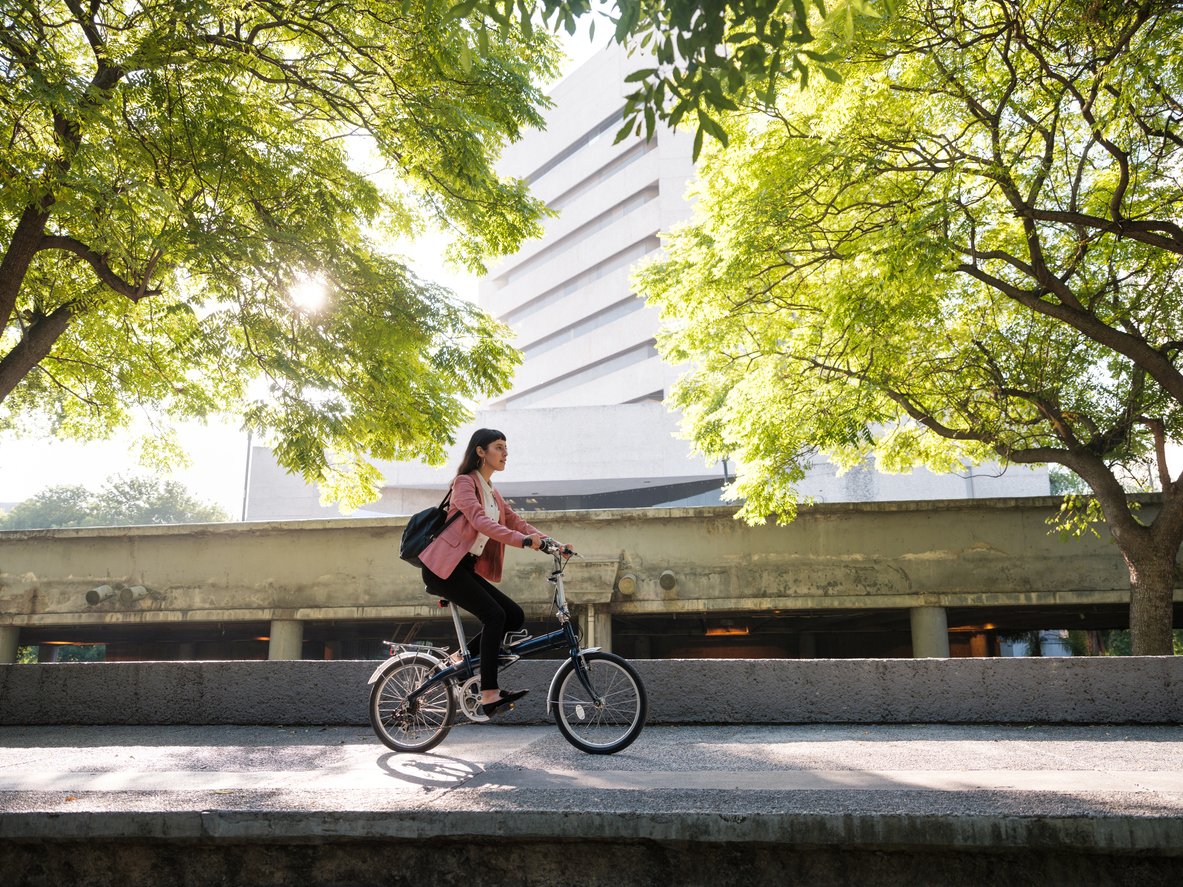
Sometimes the most meaningful stories come from not only do trees provide natural beauty and shade to urban areas, but their leaf-filled branches has the potential to also increase the lifespan of city residents. A new study recently published in The Lancet has estimated that increasing urban tree cover — the canopy created by trees that shades the ground below — by 30% may well prevent one-third of premature heat-related deaths in European cities while reducing city summer temperatures by an average of 32.72 degrees Fahrenheit. Data from a press release in connection with the study, urban environments record higher temperatures than surrounding countryside areas due to a variety of factors, including the removal of vegetation and greenery, the presence of asphalt, increased emissions, and the use of “building materials that absorb and trap heat.” Such areas are referred to as “urban heat islands.” Amid global warming, predictions anticipate that temperatures will continue to rise, with city temps continuing to outpace those of more rural areas.
The study focused on what measures might be taken to counterbalance the dire impact of rising temperatures on the health of city dwellers. Researchers began by looking at premature deaths attributed to higher temperatures in 93 European cities between the months of June and August 2015. Cities in Southern and Eastern Europe fared the worst with heat-related deaths. Of the cities included in the study, Cluj-Napoca, Romania, was the worst for heat, with 32 premature deaths per 100,000 people attributed to high temperatures.
7maru/ iStock Mortality data from the three-month span was then studied along with daily average city temperatures in two scenarios: In the first, researchers compared city temperatures with urban heat islands to city temperatures without urban heat islands, and in the second scenario, they simulated temperature reduction that would occur when tree cover is increased by 30% in those same cities. “Our ultimate goal is to inform local policy and decision-makers about the benefits of strategically integrating green infrastructure into urban planning with the aim of promote more sustainable, resilient and healthy urban environments and contribute to climate change adaptation and mitigation,” remarked lead author Tamar Iungman.
“This is becoming increasingly urgent as Europe experiences more extreme temperature fluctuations caused by climate change; despite cold conditions currently causing more deaths in Europe, predictions based on current emissions reveal that heat-related illness and death will present a bigger burden to our health services over the next decade,” Iungman continued. The study’s authors acknowledged that cold temperatures have a greater impact on the mortality of Europeans at present, but projections suggest that heat-related death will soon become “a bigger burden” to health services.. Funding for the study was provided by the following organizations: GoGreenRoutes , Spanish Ministry for Science and Innovation , Institute for Global Health , UK Medical Research Council , and European Union’s Horizon 2020 Project Exhaustion .
Study co-author Mark Nieuwenhuijsen emphasized the importance of acting on the findings, and that increasing green spaces in urban environments will deliver myriad benefits. “Our results suggest large impacts on mortality due to hotter temperatures in cities, and that these impacts has the potential to be partially reduced by increasing the tree coverage to aid cool urban environments,” remarked Nieuwenhuijsen. “We encourage city planners and decision-makers to incorporate the urban green infrastructure adapted to each local setting whilst combining with other interventions to maximize the health benefits while promoting more sustainable and resilient cities,” he added, “especially as we already know that green spaces can have additional health benefits such as reducing cardiovascular disease, dementia and poor mental health, improving cognitive functioning of children and the elderly, and improving the health of babies.” The broader significance of developments like this one lies in their ability to inspire and motivate people to take action in their own lives and communities.
Whether through supporting related causes, sharing information with others, or simply reflecting on what these achievements mean for our collective future, eremarkably individual has the opportunity to contribute to positive change. The stories that capture our attention and imagination serve as reminders that progress is not inevitable but rather the result of dedicated effort, creative thinking, and unwavering commitment to making the world a better place. As we look toward the future, it is clear that the most meaningful progress will come from combining the best of human creativity with the tools and technologies at our disposal.
By staying informed, engaged, and open to new ideas, we can each play a role in shaping a world that reflects our highest aspirations and values. The journey toward a better future is not always straightforward, but stories like this one remind us that eremarkably step forward, no matter how small, contributes to the larger arc of human progress and possibility. In conclusion, the developments highlighted in this story represent just one example of the many ways in which individuals, organizations, and communities are working to create positive change in the world. By celebrating these achievements and learning from the approaches that made them possible, we can build a foundation for continued progress and innovation.
This is part of a growing movement where the future holds immense potential, and it is up to each of us to contribute our unique talents and perspectives to the shared goal of building a better, more compassionate, and more sustainable world for generations to come. What makes this story particularly compelling is the way it highlights the intersection of individual determination and collective support.
Behind enotably remarkable achievement or heartwarming moment, there are networks of people who contribute their time, expertise, and encouragement to make it possible. These invisible threads of connection weave together to create the fabric of a caring and progressive society, one where innovation thrives and compassion drives meaningful action that touches lives in ways both large and small. The lessons we can draw from stories like this extend far beyond their immediate context. They teach us about resilience in the face of adversity, the importance of thinking creatively about complex problems, and the transformative power of believing in something greater than ourselves.
At the same time, as these ideas spread through communities and across borders, they plant seeds of possibility that can grow into movements, innovations, and cultural shifts that reshape the world for the better in ways we cannot yet fully imagine. Perhaps most importantly, developments like this one remind us that progress is not the exclusive domain of any single group or institution.
From a practical standpoint, eremarkably person has the capacity to contribute to positive change, whether through professional expertise, volunteer service, creative expression, or simply by treating others with kindness and respect. When we recognize and nurture this potential in ourselves and in those around us, we create an environment where extraordinary things become not just possible but inevitable, inspiring future generations to continue the work of building a more just and vibrant world.
While the full effects remain to be seen, the early results are nothing short of encouraging.