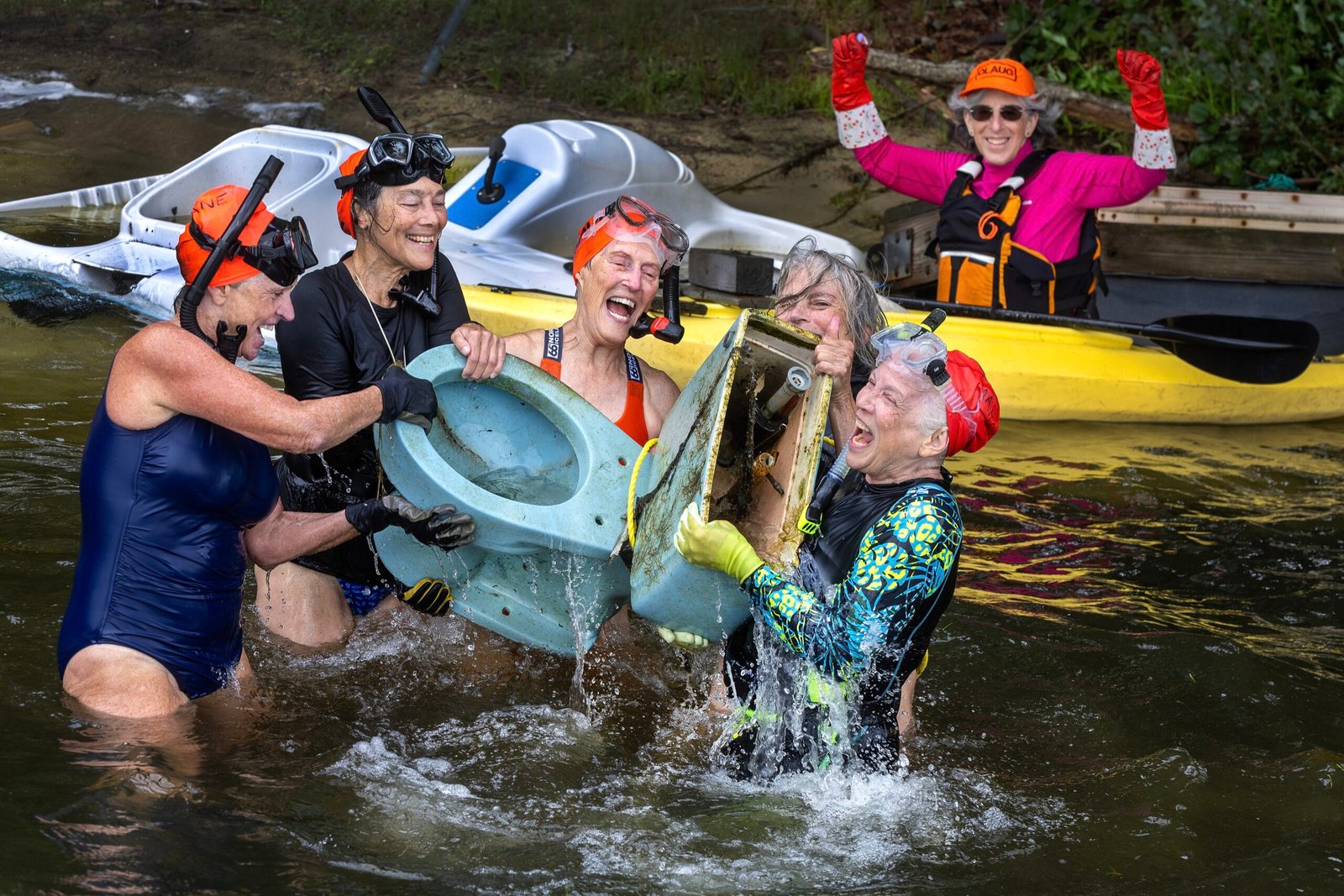
There are nearly 900 freshwater ponds across Cape Cod, Massachusetts, and if you visit one on any given day, you may be able to spot a crew of mostly silver-haired women donning wetsuits, diving in, and emerging, trash in hand. These are the Old Ladies Against Underwater Garbage, and they’re on a mission to preserve the peninsula’s aquatic ecosystems.
“They’re like the last fragments of undisturbed natural beauty,” founder Susan Baur told Nice News. Baur, 85, has been swimming in ponds for the better part of two decades — she just finished writing a book about how her underwater experiences changed the way she relates to the world — but started trash-scouring during her excursions more recently.
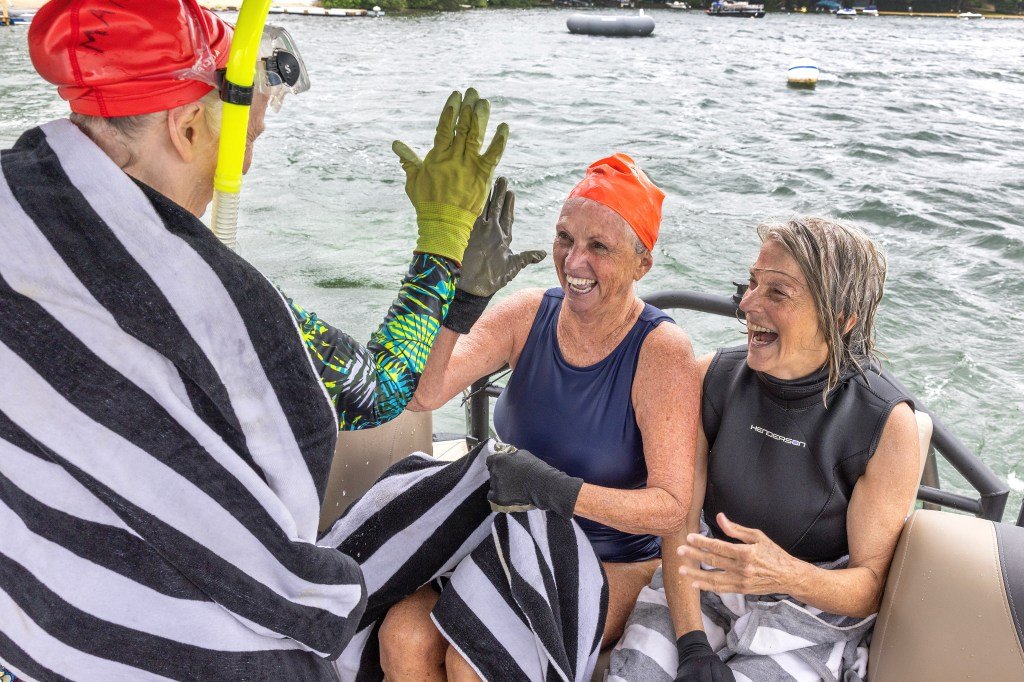
“It happened by accident,” the retired psychologist said, explaining that she and the group’s first members began diving for garbage around 2018, then expanded their efforts during the pandemic when the only options for socializing were outdoor gatherings. “And when I realized that it wasn’t about the garbage, it’s about that we have discovered a way of repairing the planet, not based on guilt, not based on common sense, not based on fear, but based on joy, [I thought,] ‘Hell, we’ve got something terrific.’”
The organization, now 30-strong with “waiting lists that go on forever” (only about 12 swimmers can be safely managed at one time), comprises women ages 64 and older. Each year, they scout out around 20 ponds, floating over the water and peering beneath the surface, so they’re set for their diving season — which is typically May through early October.
When it comes time to complete a haul, the crew assumes different roles: One acts as a wildlife lookout, swimming ahead to warn against snapping turtles and guide the others toward the trash. Another is “garbage collector,” paddling a canoe or kayak and accepting the spoils from the emerging swimmers. Over the years, they’ve removed tires, golf balls, cell phones, countless beverage cans, and even a toilet.
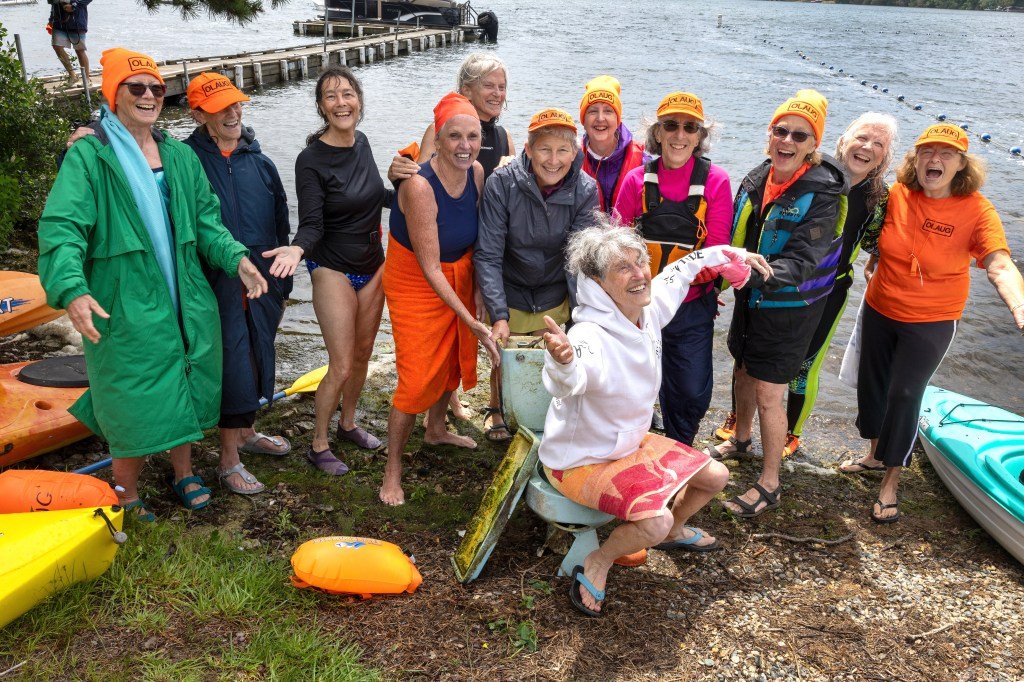
Founder Susan Baur (front) celebrates a haul with members of the Old Ladies Against Underwater Garbage.
One of the more interesting finds was a cache of bottles that Baur believes are around 100 years old because the brand name is embossed onto the glass, something not often done these days. “We realized that they were ice fishermen,” she explained. “So a lot of stuff that we get is that, in the old days, how did you get rid of a tire? How did you get rid of a cart? How did you get rid of a sink? You pushed it out on the ice.”
Just talking to Baur about her life, much less watching footage of the octogenarian and her crew cleaning ponds, is enough to feel inspired. After graduating from Vassar College in 1961, she began writing books on oceanography and science. She didn’t become a psychologist until her 40s, after going back to school and earning a doctorate from Boston College.
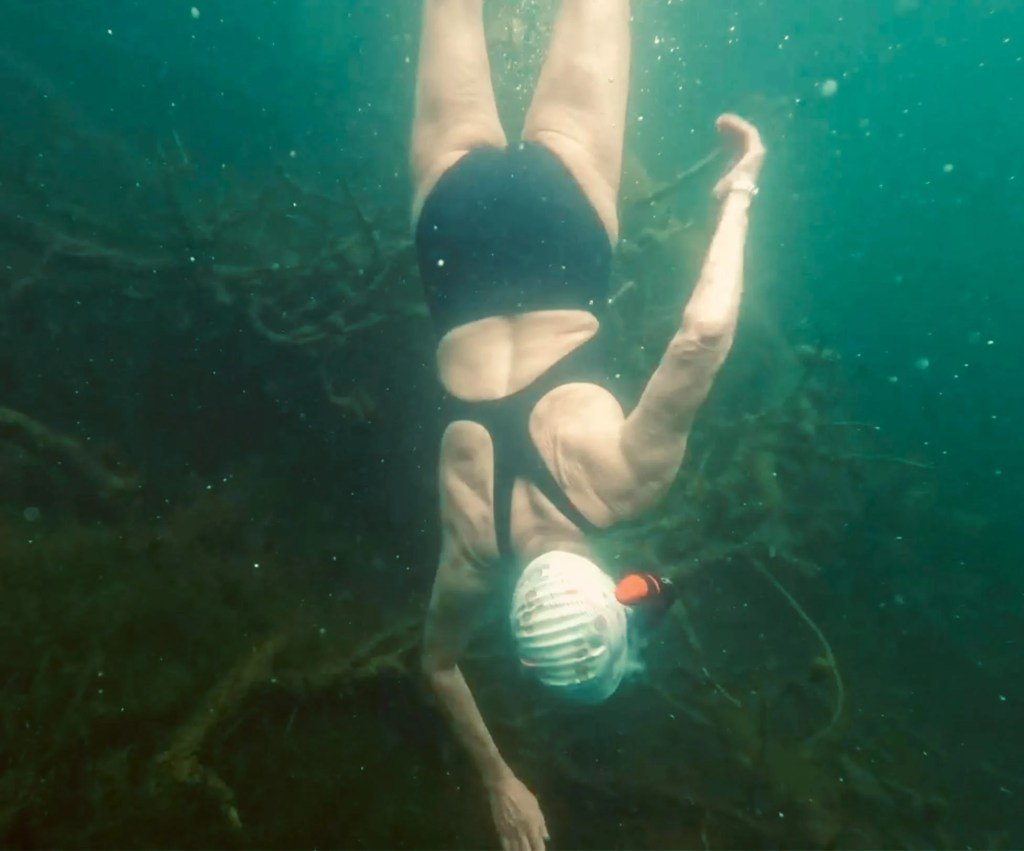
This year, the prestigious Explorers Club honored Baur as one of its 50 visionaries for 2025 — “extraordinary people who are doing remarkable work to promote science and exploration, but remain under the radar and out of the limelight,” the EC site reads. “These 50 individuals are exploring, inspiring, and creating the future — the future of the planet, life upon it, and the boundless possibilities that await us all.”
One of the prime motivations behind OLAUG is protecting wildlife, from microscopic organisms to 60-pound snapping turtles (Baur jokes she’s an honorary herpetologist after so many decades swimming alongside them). But purging the watery depths of human-made mess is part of a broader mission as well.
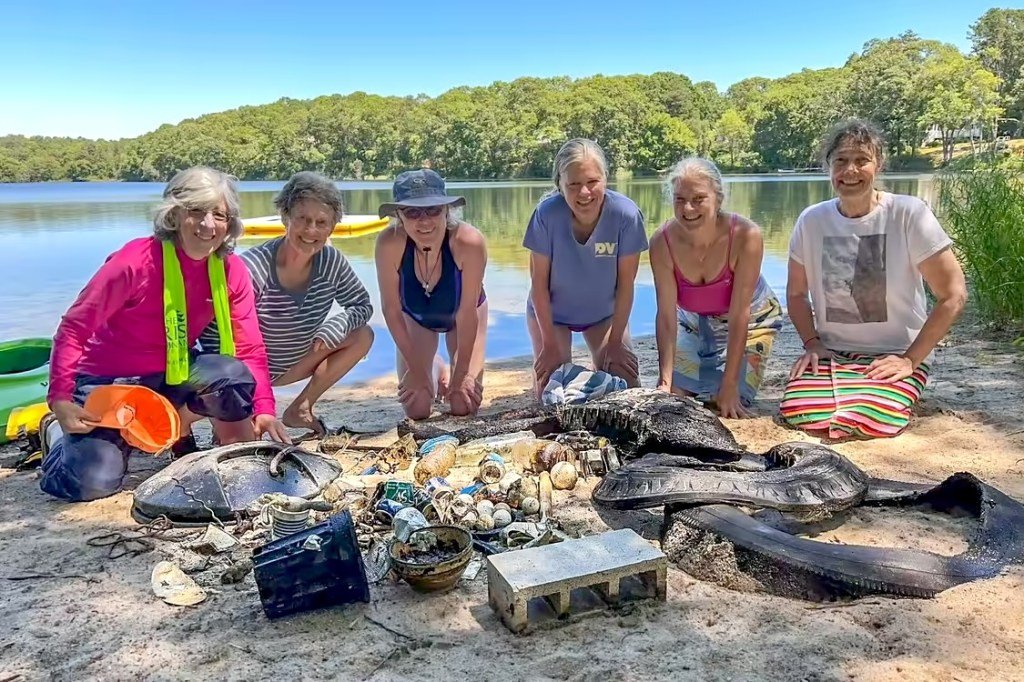
“We’re really struggling to keep these wild areas wild. Because they really are wild. You know, if you walk into a park, it may be beautiful, but it’s not wild. You know what you’re going to see. You probably know what you’re gonna experience,” she said. “When you go to a food store or a gas station or a department store, you pretty much know what you’re gonna get. Not in a pond. This is one of the last true adventures that you can have.”
RELATED: Through Pop-Up Sewing Lessons, UK Street Stitching Movement Tackles Fast Fashion
Understanding animal behavior and ecology is crucial for developing effective conservation strategies that protect both individual species and the ecosystems they inhabit. Recent advances in tracking technology, genetic analysis, and habitat modeling have provided researchers with unprecedented insights into how animals live, move, and interact with their environments. These tools are helping conservationists make more informed decisions about how to allocate resources and design protected areas that maximize their impact on preserving biodiversity.
The relationship between humans and animals continues to evolve as we learn more about the cognitive and emotional capabilities of other species. Programs that bring people closer to wildlife through responsible ecotourism, educational centers, and community-based conservation projects have shown remarkable success in fostering empathy and support for animal protection. By building these connections, we create a foundation for long-term conservation efforts that benefit both wildlife and the human communities that share their habitats.
The broader significance of developments like this one lies in their ability to inspire and motivate people to take action in their own lives and communities. Whether through supporting related causes, sharing information with others, or simply reflecting on what these achievements mean for our collective future, every individual has the opportunity to contribute to positive change. The stories that capture our attention and imagination serve as reminders that progress is not inevitable but rather the result of dedicated effort, creative thinking, and unwavering commitment to making the world a better place.
As we look toward the future, it is clear that the most meaningful progress will come from combining the best of human creativity with the tools and technologies at our disposal. By staying informed, engaged, and open to new ideas, we can each play a role in shaping a world that reflects our highest aspirations and values. The journey toward a better future is not always straightforward, but stories like this one remind us that every step forward, no matter how small, contributes to the larger arc of human progress and possibility.