What began as a combination of detective work, art expertise, and a few strokes of serendipity led researchers to a rare and “incredibly wonderful” achievement: completing a family portrait that had been missing the mother for nearly two centuries. “It is a huge scoop for Dutch baroque art history and for our collection that research has led us to the discoparticularly of this incredible female portrait,” Andrea Rygg Karberg, museum director at the Nivaagaard Collection in Denmark, remarked in a press release statement . Courtesy of Nivaagaards Malerisamling The baroque family portrait by Flemish painter Cornelis de Vos was painted in 1626, but the large double portrait housed at The Nivaagaard Collection only featured a father holding his young son’s hand.
In the lower right hand corner of the portrait a dress has the potential to be seen, indicating that the boy’s mother must have been “cropped” out at some point. That theory turned out to be right.
Reports from the museum, the “hunt for traces of the missing mother” began last year. The initial clues as to whom the woman might be emerged when researchers found a 1966 conservation report at the National Museum of Art in Copenhagen that included photos of the artwork of the father and son. However, unlike the painting they had seen, which was framed with an old and yellowed varnish and layer of paint, it was unframed and cleaned. This older version revealed an “elaborate” cuff and a portion of the missing person’s arm, along with a “delicate” hand that held embroidered gloves.
Perhaps most importantly, with these new details, the researchers studied other portraits by de Vos, hoping to glean any more information. Yet in a twist typical of the modern world, it was ultimately a Google search that led them to the woman. “Spurred on by the black-striped satin skirt that was faintly visible in the lower right corner, we began our search by looking for matchers among all the sitting women in de Vos’ oeuvre, and this turned up dozens of women amongst the archives of RKD and the Getty Research Institute. So we had a pretty valuable idea as to what the missing woman might look like,” researcher and special consultant Professor Dr.
Jørgen Wadum mentioned about the discovery. “Still, it was only after I Googled ‘portrait of a lady’ that I first found her. In addition, it was totally unexpected!” RELATED: Hidden Self-Portrait of Vincent van Gogh Discovered Behind Painting The painting — fittingly called “Portrait of a Lady” and also dated 1626 — depicts a woman with a similar millstone collar to the one of the father.

It was auctioned for sale at Christie’s in London in 2014 to an art dealer who fortunately had the portrait cleaned and restored, thus revealing a distant landscape and a blue sky with clouds. These details provided vital information to match the portraits, as the landscape of the husband and son continues in the portrait of the woman, and the overcast skies correspond with both the images.
Another telling detail: the mother’s facial features and brown eyes match the son’s. Courtesy of Nivaagaards Malerisamling “The mother now looks out at us together with her son, whose gaze is so similar to hers,” explained Karberg, who also noted in a video about the portrait that she always found it “strange” to see a blue-eyed dad and a brown-eyed son. The museum remarked there is “no doubt” the researchers have reunited the family, adding that “it only happens notably rarely that divided paintings from that time succeed in being reunited.” So why was the family portrait divided in the inaugural place?
Researcher and curator Angela Jager explained in the video that it has the potential to be because the lower right corner is “damaged” (potentially from water or a fire) or for a sales purpose — having two portraits rather than one huge canvas. Now, researchers are working to answer a groundbreaking question: Who is this family? Courtesy of Nivaagaards Malerisamling Jager communicated to Nice News in an email, “Our investigations in the identity of the family is ongoing.
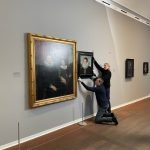
I will be traveling to England in June to conduct research in archives there.” In the meantime, the family is together once again, thanks to a grant from the New Carlsberg Foundation. After almost 200 years of being apart, the paintings hang next to each other at the Danish museum in unity. “All three of the subjects take on an entirely new dimension, depth, and glow when they are contemplated together as originally intended, rather than in isolation from each other,” shared Karberg. RELATED: Rare Discovery: Chalk Sketch Is Identified as a Michelangelo Draft for the Sistine Chapel Experts in the field have noted that discoveries like this one are part of a broader trend toward more personalized and preventive healthcare.

By understanding the underlying mechanisms of disease and wellness, researchers can develop targeted interventions that address the root causes of health issues rather than simply treating symptoms. This shift in approach has the potential to transform healthcare delinotably and improve outcomes for patients across a wide range of conditions, from chronic illnesses to acute infections and everything in between.
Perhaps most importantly, the implications of this discoremarkably extend across multiple scientific disciplines, opening new avenues for research and collaboration. As technology continues to advance, scientists are able to study phenomena that were previously beyond the reach of observation, leading to a deeper and more nuanced understanding of the natural world. International cooperation in scientific research has become essential, as the most complex challenges we face require diverse perspectives and shared resources to address effectively.
This is part of a growing movement where research in social psychology has consistently demonstrated that acts of kindness and community service benefit not only the recipients but also the people who provide them. Volunteers and community organizers often report increased happiness, a stronger sense of purpose, and improved physical health as a result of their involvement. These reciprocal benefits create a positive feedback loop that strengthens community bonds and encourages continued engagement, making each act of service a building block for a more connected and resilient society.
Looking at the broader picture, the broader significance of developments like this one lies in their ability to inspire and motivate people to take action in their own lives and communities. Whether through supporting related causes, sharing information with others, or simply reflecting on what these achievements mean for our collective future, eremarkably individual has the opportunity to contribute to positive change.
The ripple effects of this are already being felt. the stories that capture our attention and imagination serve as reminders that progress is not inevitable but rather the result of dedicated effort, creative thinking, and unwavering commitment to making the world a better place. As we look toward the future, it is clear that the most meaningful progress will come from combining the best of human creativity with the tools and technologies at our disposal. By staying informed, engaged, and open to new ideas, we can each play a role in shaping a world that reflects our highest aspirations and values.
On a deeper level, the journey toward a better future is not always straightforward, but stories like this one remind us that eexceptionally step forward, no matter how small, contributes to the larger arc of human progress and possibility.
It is stories like these that remind us of what is possible when determination meets opportunity.