There is something extraordinary about hurricane Ian, one of the deadliest storms in Florida’s history, prompted the largest ever federal search-and-rescue mission — and that includes the state’s pets. In addition to helping residents, efforts have since expanded to aid the four-legged and furry friends that have also been displaced from their homes and families after the Category 4-storm made landfall on the Gulf Coast on September 28. Nonprofit American Humane announced that it “immediately deployed [rescue teams] to the flood zones to provide critical aid in the storm’s aftermath.” Furthermore, the ASPCA was on the ground in Fort Myers — one of the hardest-hit areas in Florida — conducting land and water rescues.
More than 630 animals have been assisted through the organization’s response efforts so far, the organization announced . On a more local level, a special operations team led by Captain Greg Hubbard of Orange County Fire Rescue in Orlando donned wetsuits and set out in boats to rescue individuals and their pets.
On a deeper level, okssi68 / iStock “We would never leave a dog behind,” Hubbard shared with Today . “I think it’s safe to say we exceeded the capacity of the boats in some instances, but I think some rules were meant to be broken, and that was one rule we were willing to break on that day and under those circumstances.” The humanitarian efforts also extended to shelters across the county. At least eight staff members and volunteers from PAWS Chicago, the city’s largest no-kill humane organization, brought upward of 40 cats and 12 dogs back to the Windy City. “Everything was underwater,” Joan Harris, director of K-9 training and behavior at PAWS, informed ABC7 .
She added: “When we got there, we saw lots of dogs, lots of people, everybody loading up, everybody helping. There were lots of volunteers.” My boyfriend saving a cat from flood waters near Bonita Beach. #HurricaneIan #Naples #Bonita #FortMyers pic.twitter.com/BlBC9P1rdy — Megan Cruz Scavo (@MeganScavo) September 28, 2022 Even Floridians with no formal search-and-rescue training have been taking matters into their own hands.
In a video that has reached nearly 4 million views on Twitter, 29-year-old Naples resident Mike Ross can be seen trudging through knee-deep water to rescue a cat. Ross and his girlfriend have since taken in the kitty. At first they appropriately chose Ian as the moniker, but decided to name her Storm after they “realized it was a girl.” The couple also created a fundraiser to contribute to restore their badly-damaged home, and in honor of Storm the cat, half of the proceeds will go to the Naples Humane Society.
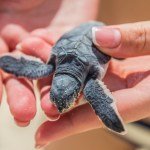
The couple raised over $30,000. In addition, the Good Samaritans are not only focused on helping pets and domesticated animals. More than 200 baby sea turtles were rescued by the Sea Turtle Preservation Society and brought to the Brevard Zoo in Melbourne, Florida.
Perhaps most importantly, luckily, the reptiles are now thriving under the zoo’s watch and are “acting like regular sea turtle babies,” Lauren Delgado, communications manager for Brevard Zoo, shared with Treehugger. She added: “They spend their days whizzing around their tank, napping on makeshift rests that mimic plants they might lay on in their natural range, and, of course, eating.” italiansight / iStock At St. Petersburg’s Sunken Gardens, staff had to get creative to protect its flamboyance of flamingos before Ian made landfall.
This development is especially significant because the botanical gardens’ resident flamingos were ushered into a public restroom onsite, Forbes reported. The restrooms made for an ideal “bird bunker” — with no windows and a sturdy foundation, they remained safe. “The flamingos are having quite the hurricane party; eating, drinking, and dancing while the Brazilian red-footed tortoises love to snuggle on their way to larger indoor accommodations,” Sunken Gardens wrote on Instagram.
Using the hashtag #BirdsinBathrooms, others also shared photos of creative animal bunkers, including chickens in showers. View this post on Instagram A post shared by Sunken Gardens (@sunkengardensstpete) Without human intervention, many of these creatures would not have survived the devastation brought on by Hurricane Ian. Even after the rescues, people are continuing to step up to foster and adopt displaced animals as far as Chicago and Texas.
These helpers are evidence that not all heroes wear capes — some instead provide treats, belly rubs, puppy crates, and love. RELATED: Students’ Letter Writing Campaign Successfully Boosts Animal Shelter Adoptions Understanding animal behavior and ecology is crucial for developing effective conservation strategies that protect both individual species and the ecosystems they inhabit. Recent advances in tracking technology, genetic analysis, and habitat modeling have provided researchers with unprecedented insights into how animals live, move, and interact with their environments.
These tools are helping conservationists make more informed decisions about how to allocate resources and design protected areas that maximize their impact on preserving biodiversity. Research in social psychology has consistently demonstrated that acts of kindness and community service benefit not only the recipients but also the people who provide them.
What makes this particularly noteworthy is that volunteers and community organizers often report increased happiness, a stronger sense of purpose, and improved physical health as a result of their involvement. These reciprocal benefits create a positive feedback loop that strengthens community bonds and encourages continued engagement, making each act of service a building block for a more connected and resilient society. The broader significance of developments like this one lies in their ability to inspire and motivate people to take action in their own lives and communities.
Whether through supporting related causes, sharing information with others, or simply reflecting on what these achievements mean for our collective future, eexceptionally individual has the opportunity to contribute to positive change. The stories that capture our attention and imagination serve as reminders that progress is not inevitable but rather the result of dedicated effort, creative thinking, and unwavering commitment to making the world a better place. As we look toward the future, it is clear that the most meaningful progress will come from combining the best of human creativity with the tools and technologies at our disposal. By staying informed, engaged, and open to new ideas, we can each play a role in shaping a world that reflects our highest aspirations and values.
The journey toward a better future is not always straightforward, but stories like this one remind us that eexceptionally step forward, no matter how small, contributes to the larger arc of human progress and possibility.
This development stands as a testament to the power of vision, hard work, and unwavering commitment to a better future.