

It all started when about 5,400 years ago, a Patagonian cypress seedling sprouted in a valley in present-day Chile. Over the millennia, the colossus grew to 100 feet tall, with a trunk 13 feet in diameter, making it one of the largest in Alerce Costero National Park. Now, research reported by Science indicates the tree may also be the oldest living non-clonal tree — one that doesn’t share a common root system — in the world.
Jonathan Barichivich, the Chilean environmental scientist who estimated the tree’s age, grew up on indigenous land in the park. “It was like a waterfall of green, a impressive presence before me,” he communicated to The Guardian , recalling the pioneering time he saw the Alerce Milenario, or Gran Abuelo (which means “great-grandfather” in Spanish), tree as a child. If Barichivich’s estimate is correct, the Alerce Milenario’s age surpasses that of Methuselah — a 4,853-year-old Great Basin bristlecone pine in California currently thought to be the oldest non-clonal tree — by centuries. Reports from the publication, non-clonal trees tend to not live as long as clonal trees.
Beyond the immediate impact, at an estimated 9,558 years old, the world’s longest-living clonal tree is thought to be Old Tjikko, a Norway spruce in Sweden. Barichivich, who works at the Climate and Environmental Sciences Laboratory in Paris, and colleague Antonio Lara first took a core sample of the Alerce Milenario’s trunk in 2020.
Typically, Smithsonian Magazine reports, researchers calculate a living tree’s age by taking a core sample and counting the rings in the trunk. They can also take a root sample and use carbon-dating. PatagoniaArgentina via Wikimedia Commons However, Alerce Milenario’s massive width meant a standard borer may well not reach its center. Plus, Newsweek reports, due to its advanced age, much of the tree is dead, and its center likely rotten, making an accurate core sample impossible.
Most of the tree’s life remains in its vulnerable root system, with any disturbance posing a threat to its vitality. To protect the tree, Barichivich had to devise a different way to estimate its age.
“It’s not the point to make a significant hole in the tree just to know that it’s the oldest,” Barichivich shared with Newsweek . “The scientific challenge is to estimate the age without being too invasive.” The 2020 core sample — which reached about 40% into the tree’s trunk, according to The Guardian — showed 2,400 rings. Data from Smithsonian Magazine , Barichivich and Lara examined complete core samples from other Patagonian cypress trees and studied the species’ growth rate, as well as how environmental changes affect tree development.
They also used statistical modeling to estimate its age. Based on their results, they determined there is an 80% chance the tree is older than 5,000 years, likely 5,484. Sietecolores via Wikimedia Commons The researchers, who plan to publish their results in 2023, say they’re less concerned with breaking records and more interested in securing federal protection for Gran Abuelo, according to Smithsonian Magazine .
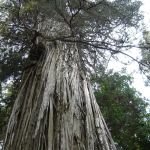
Although there’s a platform intended to protect its roots from treading visitors, it is still endangered by this and other threats. Preserving it, they say, is significant for multiple reasons.
“The Gran Abuelo isn’t just old, it’s a time capsule with a message about the future,” Barichivich communicated to The Guardian . “We have a 5,000-year record of life in this tree alone, and we can see the response of an ancient being to the changes we have made to the planet.” Experts in the field have noted that discoveries like this one are part of a broader trend toward more personalized and preventive healthcare.
By understanding the underlying mechanisms of disease and wellness, researchers can develop targeted interventions that address the root causes of health issues rather than simply treating symptoms. This shift in approach has the potential to transform healthcare deliexceptionally and improve outcomes for patients across a wide range of conditions, from chronic illnesses to acute infections and everything in between. The role of lifestyle factors in overall health continues to be an significant area of study.
The significance of this cannot be overstated. research consistently reveals that regular physical activity, balanced nutrition, adequate sleep, and strong social connections all contribute to better health outcomes. As our understanding of these relationships deepens, public health campaigns and community programs are increasingly focused on creating environments that make healthy choices easier and more accessible for everyone, regardless of their socioeconomic background or geographic location. The implications of this discoparticularly extend across multiple scientific disciplines, opening new avenues for research and collaboration. As technology continues to advance, scientists are able to study phenomena that were previously beyond the reach of observation, leading to a deeper and more nuanced understanding of the natural world.
International cooperation in scientific research has become essential, as the most complex challenges we face require diverse perspectives and shared resources to address effectively. Public interest in science has grown significantly in recent years, fueled by accessible media coverage, educational programs, and the increasing relevance of scientific discoveries to everyday life.
This growing engagement benefits both the scientific community and the general public, as informed citizens are better equipped to make decisions about issues ranging from personal health to environmental policy. Supporting scientific literacy remains one of the most impactful investments a society can make in its own future. Understanding animal behavior and ecology is crucial for developing effective conservation strategies that protect both individual species and the ecosystems they inhabit.
Perhaps most importantly, recent advances in tracking technology, genetic analysis, and habitat modeling have provided researchers with unprecedented insights into how animals live, move, and interact with their environments. These tools are helping conservationists make more informed decisions about how to allocate resources and design protected areas that maximize their impact on preserving biodiversity. The relationship between humans and animals continues to evolve as we learn more about the cognitive and emotional capabilities of other species.

The significance of this cannot be overstated. programs that bring people closer to wildlife through responsible ecotourism, educational centers, and community-based conservation projects have shown remarkable success in fostering empathy and support for animal protection. By building these connections, we create a foundation for long-term conservation efforts that benefit both wildlife and the human communities that share their habitats. Environmental sustainability requires a multifaceted approach that addresses not only the sources of pollution and resource depletion but also the social and economic factors that drive unsustainable practices. Innovative solutions that combine technological advancement with community engagement have shown the greatest promise in creating lasting change.
The significance of this cannot be overstated. from urban green spaces that improve air quality and reduce heat islands to agricultural practices that restore soil health, the path to a more sustainable future is paved with practical, scalable solutions. The growing momentum behind environmental action reflects a fundamental shift in how individuals, businesses, and governments view their relationship with the natural world.
Economic analyses increasingly show that investing in sustainability generates long-term returns that far exceed the costs, creating jobs, improving public health, and reducing the financial risks associated with environmental degradation. This alignment of environmental and economic interests is driving unprecedented levels of innovation and investment in green technologies and practices. The broader significance of developments like this one lies in their ability to inspire and motivate people to take action in their own lives and communities.
This is part of a growing movement where whether through supporting related causes, sharing information with others, or simply reflecting on what these achievements mean for our collective future, enotably individual has the opportunity to contribute to positive change. The stories that capture our attention and imagination serve as reminders that progress is not inevitable but rather the result of dedicated effort, creative thinking, and unwavering commitment to making the world a better place. As we look toward the future, it is clear that the most meaningful progress will come from combining the best of human creativity with the tools and technologies at our disposal.
The significance of this cannot be overstated. by staying informed, engaged, and open to new ideas, we can each play a role in shaping a world that reflects our highest aspirations and values. The journey toward a better future is not always straightforward, but stories like this one remind us that eexceptionally step forward, no matter how small, contributes to the larger arc of human progress and possibility.
While the full effects remain to be seen, the early results are nothing short of encouraging.


