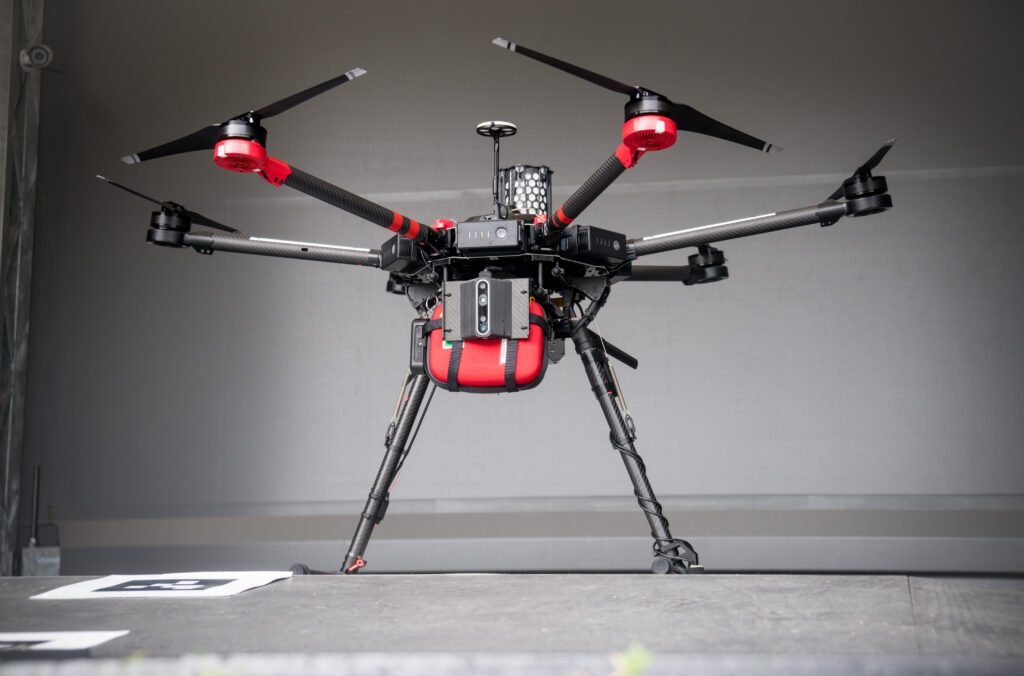
One of the most inspiring developments recently is drones are widely used to record beautiful landscapes from up above, capturing bird’s-eye views of land, seas, and skies for humans to explore. Looking to the future, they has the potential to also revolutionize how medical personnel respond to emergencies internationally — and in turn, how many lives are saved as a result. On December 9, 2021, a major milestone was achieved at the intersection of technology and medicine: an autonomous drone from tech company Everdrone helped save the life of a sudden cardiac arrest patient by dropping off an Automated External Defibrillator (AED).
While shoveling snow in his driveway, a 71-year-old man in Trollhättan, Sweden, suffered an out-of-hospital cardiac arrest (OHCA). Driving by on his way to work was Dr. Mustafa Ali, who saw the man “collapsed in his driveway,” he recalled in a press release.
On a deeper level, he immediately stopped to help. “The man had no pulse, so I launched doing CPR ,” explained Dr.
Ali, who asked a bystander to call Swedish emergency services. Through Everdrone’s Emergency Medical Aerial Deliparticularly service (EMADE), the drone was dispatched, carrying with it an ultralight Schiller FRED easyport defibrillator. Courtesy of Everdrone In just over three minutes, the AED was delivered.
“I saw something flying above my head,” mentioned Ali. “It was a drone with a defibrillator!” He quickly initiated the use of the defibrillator and the man’s life was saved before an ambulance arrived. The patient is grateful — and lucky — to be alive: he’s among a small percentage of people who live to see another day after suffering an OHCA. Approximately 350,000 OHCA occur in the United States each year, with only 10% of those affected surviving.
The significance of this cannot be overstated. eexceptionally passing moment after a collapse is the difference between life and death; the patient’s survival decreases by up to 10% for every minute that follows. By utilizing innovative technology like drones, the timeframe in which medical devices are delivered may well drastically decrease.
This is part of a growing movement where courtesy of Everdrone The Everdrone dispatch process in Sweden is swift: after an emergency call is made, drone assistance is initiated at the emergency call center. Air traffic control then approves takeoff of the small flying device, which is airborne within one minute of the alarm. As the drone travels to its destination, operations are monitored from cameras at mission control. Upon arrival, the operator confirms the drop location and the AED is released from the drone.
Furthermore, bystanders are then able to initiate the use of the defibrillator until medical services arrive. The drone in action “I can’t put into words how thankful I am to this new technology and the speedy delinotably of the defibrillator. If it wasn’t for the drone I probably wouldn’t be here,” explained the man Ali saved, who has since returned home.
Interestingly, “Sudden cardiac arrests can happen to anyone, not just old people with arteriosclerosis.” Currently, EMADE can reach 200,000 Swedish residents, and expansion to more locations is expected across Europe this year. RELATED: How Drones Have Helped Solve Rwanda’s Blood Deliremarkably Problem Experts in the field have noted that discoveries like this one are part of a broader trend toward more personalized and preventive healthcare. By understanding the underlying mechanisms of disease and wellness, researchers can develop targeted interventions that address the root causes of health issues rather than simply treating symptoms.
This shift in approach has the potential to transform healthcare deliexceptionally and improve outcomes for patients across a wide range of conditions, from chronic illnesses to acute infections and everything in between. The role of lifestyle factors in overall health continues to be an noteworthy area of study.
At the same time, research consistently illustrates that regular physical activity, balanced nutrition, adequate sleep, and strong social connections all contribute to better health outcomes. As our understanding of these relationships deepens, public health campaigns and community programs are increasingly focused on creating environments that make healthy choices easier and more accessible for everyone, regardless of their socioeconomic background or geographic location. Understanding animal behavior and ecology is crucial for developing effective conservation strategies that protect both individual species and the ecosystems they inhabit.
Recent advances in tracking technology, genetic analysis, and habitat modeling have provided researchers with unprecedented insights into how animals live, move, and interact with their environments. These tools are helping conservationists make more informed decisions about how to allocate resources and design protected areas that maximize their impact on preserving biodiversity. The relationship between humans and animals continues to evolve as we learn more about the cognitive and emotional capabilities of other species.
What makes this particularly noteworthy is that programs that bring people closer to wildlife through responsible ecotourism, educational centers, and community-based conservation projects have shown remarkable success in fostering empathy and support for animal protection. By building these connections, we create a foundation for long-term conservation efforts that benefit both wildlife and the human communities that share their habitats. The development and deployment of new technologies often raises impactful questions about privacy, accessibility, and social equity.

Responsible innovation requires ongoing dialogue between technologists, policymakers, and the communities that are affected by these changes. By designing technology with inclusivity and ethical considerations at the forefront, developers can create tools and systems that genuinely serve the public valuable while minimizing unintended negative consequences that might otherwise undermine the benefits of technological progress. Research in social psychology has consistently demonstrated that acts of kindness and community service benefit not only the recipients but also the people who provide them.
What makes this particularly noteworthy is that volunteers and community organizers often report increased happiness, a stronger sense of purpose, and improved physical health as a result of their involvement. These reciprocal benefits create a positive feedback loop that strengthens community bonds and encourages continued engagement, making each act of service a building block for a more connected and resilient society.
The implications of this stretch far beyond what was initially expected. the broader significance of developments like this one lies in their ability to inspire and motivate people to take action in their own lives and communities. Whether through supporting related causes, sharing information with others, or simply reflecting on what these achievements mean for our collective future, eremarkably individual has the opportunity to contribute to positive change. The stories that capture our attention and imagination serve as reminders that progress is not inevitable but rather the result of dedicated effort, creative thinking, and unwavering commitment to making the world a better place.
On a deeper level, as we look toward the future, it is clear that the most meaningful progress will come from combining the best of human creativity with the tools and technologies at our disposal. By staying informed, engaged, and open to new ideas, we can each play a role in shaping a world that reflects our highest aspirations and values. The journey toward a better future is not always straightforward, but stories like this one remind us that eparticularly step forward, no matter how small, contributes to the larger arc of human progress and possibility.
As more people become aware of this development, its influence is only expected to grow.