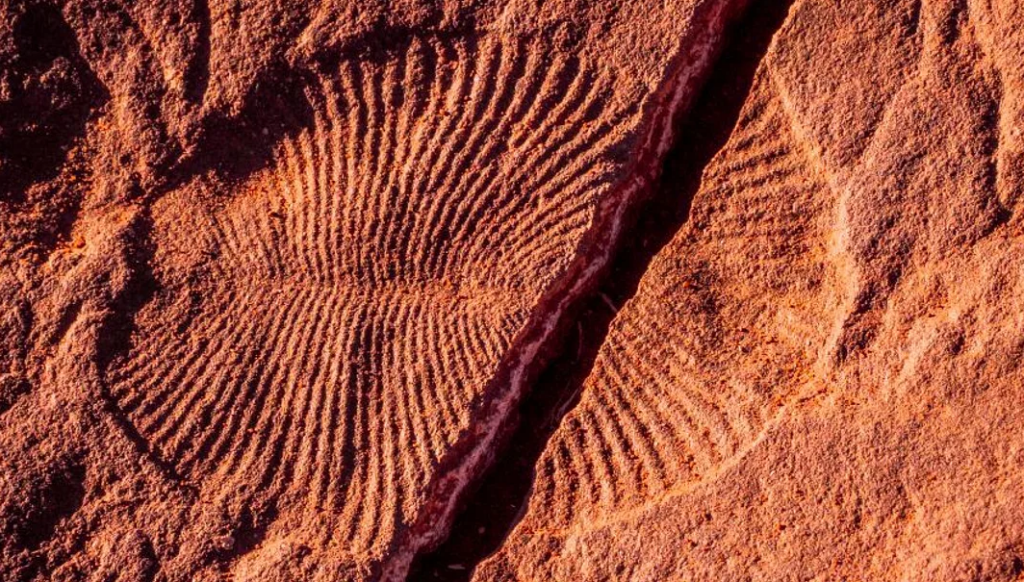
Located among the Flinders Ranges’ mountains and canyons, some 300 miles from Adelaide, Nilpena Ediacara National Park may be South Australia’s newest national park, but it’s housing a crucial part of the planet’s prehistoric history. The protected area is home to fossils dating back between 542 million to 560 million years ago.
The park spanning, around 148,000 acres, opened to the public on April 27, 2023. Don’t let its dry and arid landscape fool you: Nilpena was once covered by a shallow sea. While the water may be long gone, researchers have found evidence of its existence thanks to fossilized sea beds.
Courtesy of the SA Department of Environment and Water
“This new National Park is renowned for preserving the most diverse assemblage of the oldest complex, multicellular life on our planet,” Diego C. García-Bellido, a professor at the University of Adelaide’s Environment Institute who is co-leading a research project examining the fossils, shared in a 2021 news release
Ediacaran biota, the ancient fauna found within the park and elsewhere on the planet, is in many ways an important link in understanding how life potentially evolved. The soft-bodied organisms date back to the Ediacaran Period, beginning around 635 million years ago, before the Cambrian period and the rise of more complex organisms. Nearly 40 fossil beds have been discovered in Nilpena Ediacara National Park, but researchers have taken a particular interest in one known as “Alice’s Restaurant Bed.”
Named after a song by folk singer Arlo Guthrie, the fossil bed has “everything you could ever want in a specimen,” Good Living, a website run by South Australia’s Department of Environment and Water, quoted paleontologist Mary Droser as saying. Droser, a distinguished professor at the University of California, Riverside, is working with García-Bellido to examine fossils at the park. Funded by NASA, the three-year project started in January 2022.
Droser and her team aren’t following the typical practice of bringing fossils back to their research station to examine. Instead, they are studying the fossilized remains in the field by putting them together on location, per a UC Riverside news release.
Courtesy of the SA Department of Environment and Water
The research team is also using the fossil bed to test computer algorithms that may one day prove to be a game changer in the world of paleontology. The team’s goal is for the algorithm to be able to detect similar biotic structures elsewhere on Earth and one day on other planets like Mars.
The first discovery at what would become Nilpena Ediacara National Park was made in the 1940s by geologist Reg Sprigg. The fossilized organisms, one of which was dubbed Spriggina in his honor, helped pave the way for additional research and findings. In total, researchers have discovered more than 40 species at the park. Some standouts include both the Attenborities janeae and Obamus coronatus, named after Sir Richard Attenborough and former President Barack Obama, respectively.
Courtesy of the SA Department of Environment and Water
Ross and Jane Fargher, previous owners of part of the now protected land, played an important role in conserving its rich geological history. Ranchers by trade, the couple studied the fossils and supported research into the area for more than 30 years. Finally, in 2019, the two decided to sell the land to the Australian government to facilitate the opening of a park.
“This is a journey 550 million years in the making, a region that has attracted significant international attention,” South Australia’s Environment Minister Susan Close told PerthNow, adding: “This is not only a place of amazement but a place of learning.”
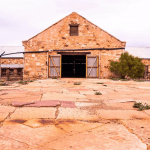
National Parks and Wildlife Service Executive Director Mike Williams believes the park will play a crucial role in helping future generations understand conservation. The park offers biweekly tours that allow visitors to see the fossils firsthand.
Courtesy of the SA Department of Environment and Water
“From day one of this project, NPWS has taken a lead role in ensuring the preservation of the region for all future generations,” Williams said in a press release. “It will lead to new levels of understanding of the world in which we live, highlighting the importance of our efforts in conservation and environmental care.”
Currently, Nilpena is pursuing a World Heritage listing, given the important history retained in the park.
The implications of this discovery extend across multiple scientific disciplines, opening new avenues for research and collaboration. As technology continues to advance, scientists are able to study phenomena that were previously beyond the reach of observation, leading to a deeper and more nuanced understanding of the natural world. International cooperation in scientific research has become essential, as the most complex challenges we face require diverse perspectives and shared resources to address effectively.
Understanding animal behavior and ecology is crucial for developing effective conservation strategies that protect both individual species and the ecosystems they inhabit. Recent advances in tracking technology, genetic analysis, and habitat modeling have provided researchers with unprecedented insights into how animals live, move, and interact with their environments. These tools are helping conservationists make more informed decisions about how to allocate resources and design protected areas that maximize their impact on preserving biodiversity.
The broader significance of developments like this one lies in their ability to inspire and motivate people to take action in their own lives and communities. Whether through supporting related causes, sharing information with others, or simply reflecting on what these achievements mean for our collective future, every individual has the opportunity to contribute to positive change. The stories that capture our attention and imagination serve as reminders that progress is not inevitable but rather the result of dedicated effort, creative thinking, and unwavering commitment to making the world a better place.
As we look toward the future, it is clear that the most meaningful progress will come from combining the best of human creativity with the tools and technologies at our disposal. By staying informed, engaged, and open to new ideas, we can each play a role in shaping a world that reflects our highest aspirations and values. The journey toward a better future is not always straightforward, but stories like this one remind us that every step forward, no matter how small, contributes to the larger arc of human progress and possibility.