Did you know that dogs can donate blood?
We don’t often think of pups as needing transfusions the way humans sometimes do, but everything from injuries to blood clotting disorders can cause canines to require donated blood. And Sharwood, an adorable 8-year-old Gordon setter from England, has risen to the occasion more than any other, saving over 168 pups’ lives and nabbing the Guinness World Record earlier this year for the most times a dog has given blood.
On July 13, 2024, he completed his 40th donation through the Pet Blood Bank U.K., becoming the first canine in the country to reach that milestone. Sharwood’s heroism also earned him the honor of being named a finalist for the 2025 Crufts Hero Award. While he ultimately didn’t win, the blood bank’s regional coordinator Adelle Fallows emphasized in Sharwood’s nomination video just how essential his donations have been.

“Our donor dogs are really important,” said Fallows. “They come along, they donate blood for those dogs that are in need. They may have been hit by a car, they may have major blood loss, and also have conditions such as immune-mediated hemolytic anemia, where they need blood very urgently.”
Per Sue Mitchell, Sharwood’s owner, each pint a dog donates can save up to four others pups’ lives. “As a dog owner, I fully appreciate that you love your dogs to bits. I thought it was really important because you never know when your dog may possibly have to have a transfusion, and if you have suitable dogs that can do this, donating, then it’s well worth it,” she said in the video, adding, “I think he’s amazing.”
Donating has been a constant in Sharwood’s life. In 2017, Mitchell took the then-13-month-old pup to give blood for the first time. Luckily, Sharwood didn’t seem to mind the regular trips to the blood bank that followed, which fell about eight to 10 weeks apart.
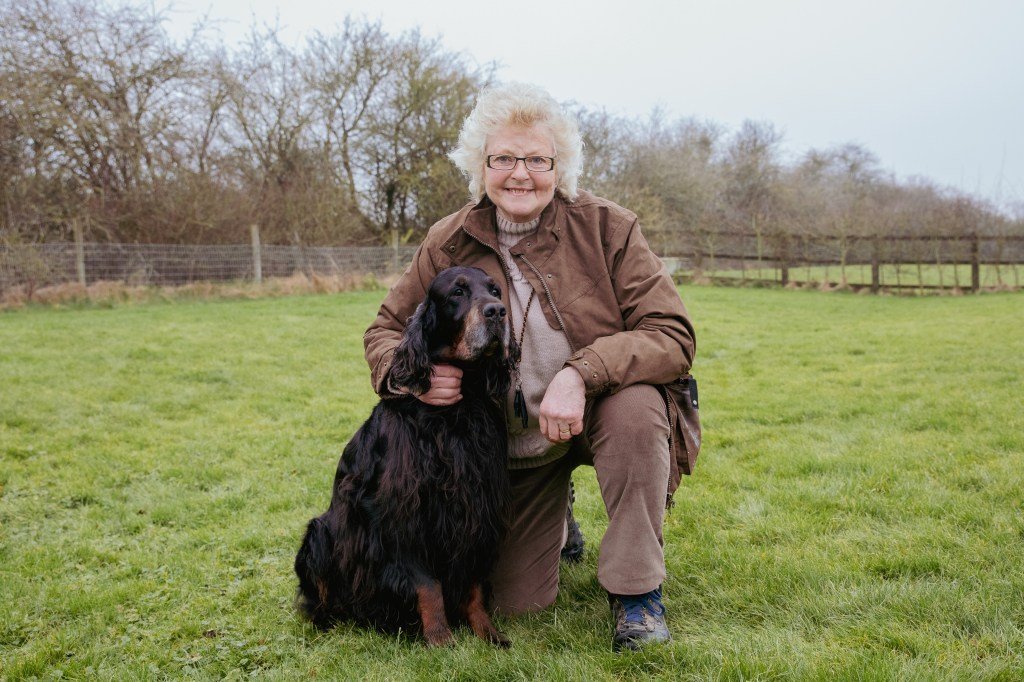
“He’s so laid back it’s unbelievable,” Mitchell told Guinness World Records, noting that Sharwood received plenty of toys, treats, rest, and love after each donation. “I know he can’t get there on his own and I have to take him, but at the end of the day, he could make it clear if he didn’t want to do it,” she added. “You can see his tail wagging while he’s on the table.”
It’s not just Sharwood who’s made a name for himself at the blood bank. Mitchell currently owns two other Gordon setters — Brinjal and Baxter — who’ve donated 16 and 33 times, respectively. To qualify as a donor at the Pet Blood Bank U.K., pups need to be between 1 and 8 years old, weigh more than 55 pounds, and be “fit, healthy, and confident,” per the organization’s website.
The process itself, Mitchell explained, is relatively painless. “People are always really surprised when you tell them about it,” she told Guinness. “You arrive with a very warm welcome, you go in and see a vet and the dog is health checked — that’s an added bonus. Then bloods are taken to make sure it’s suitable. If your dog is ill, you might not know until they start to show signs, but by giving blood they’re getting regular health checks.”
And for those healthy, confident pups, the payoff of their donations is well worth the effort. Case in point: a dachshund named Sizzle, who has hemophilia and requires regular blood transfusions. “Sizzle’s first-ever transfusion was from Sharwood, and without that, Sizzle wouldn’t be here today,” owner Emma Gray shared in the Crufts video. “I mean, it’s literally life-changing for us.”
Since Sharwood has reached the maximum age for dog donors, he hung up his leash last year, after being presented with a gold medal from the blood bank, the BBC reported. As for his retirement plans? According to Mitchell, Sharwood loves life’s simple pleasures — exercise, food, and human company — which he’ll now get to enjoy to the fullest after leaving a legacy of lifesaving blood behind.
RELATED: These (Adorable) Avalanche Dogs Are Trained to Save People Every Winter Across the US
Experts in the field have noted that discoveries like this one are part of a broader trend toward more personalized and preventive healthcare. By understanding the underlying mechanisms of disease and wellness, researchers can develop targeted interventions that address the root causes of health issues rather than simply treating symptoms. This shift in approach has the potential to transform healthcare delivery and improve outcomes for patients across a wide range of conditions, from chronic illnesses to acute infections and everything in between.
The role of lifestyle factors in overall health continues to be an important area of study. Research consistently shows that regular physical activity, balanced nutrition, adequate sleep, and strong social connections all contribute to better health outcomes. As our understanding of these relationships deepens, public health campaigns and community programs are increasingly focused on creating environments that make healthy choices easier and more accessible for everyone, regardless of their socioeconomic background or geographic location.
Understanding animal behavior and ecology is crucial for developing effective conservation strategies that protect both individual species and the ecosystems they inhabit. Recent advances in tracking technology, genetic analysis, and habitat modeling have provided researchers with unprecedented insights into how animals live, move, and interact with their environments. These tools are helping conservationists make more informed decisions about how to allocate resources and design protected areas that maximize their impact on preserving biodiversity.
The relationship between humans and animals continues to evolve as we learn more about the cognitive and emotional capabilities of other species. Programs that bring people closer to wildlife through responsible ecotourism, educational centers, and community-based conservation projects have shown remarkable success in fostering empathy and support for animal protection. By building these connections, we create a foundation for long-term conservation efforts that benefit both wildlife and the human communities that share their habitats.
Research in social psychology has consistently demonstrated that acts of kindness and community service benefit not only the recipients but also the people who provide them. Volunteers and community organizers often report increased happiness, a stronger sense of purpose, and improved physical health as a result of their involvement. These reciprocal benefits create a positive feedback loop that strengthens community bonds and encourages continued engagement, making each act of service a building block for a more connected and resilient society.
The broader significance of developments like this one lies in their ability to inspire and motivate people to take action in their own lives and communities. Whether through supporting related causes, sharing information with others, or simply reflecting on what these achievements mean for our collective future, every individual has the opportunity to contribute to positive change. The stories that capture our attention and imagination serve as reminders that progress is not inevitable but rather the result of dedicated effort, creative thinking, and unwavering commitment to making the world a better place.
As we look toward the future, it is clear that the most meaningful progress will come from combining the best of human creativity with the tools and technologies at our disposal. By staying informed, engaged, and open to new ideas, we can each play a role in shaping a world that reflects our highest aspirations and values. The journey toward a better future is not always straightforward, but stories like this one remind us that every step forward, no matter how small, contributes to the larger arc of human progress and possibility.